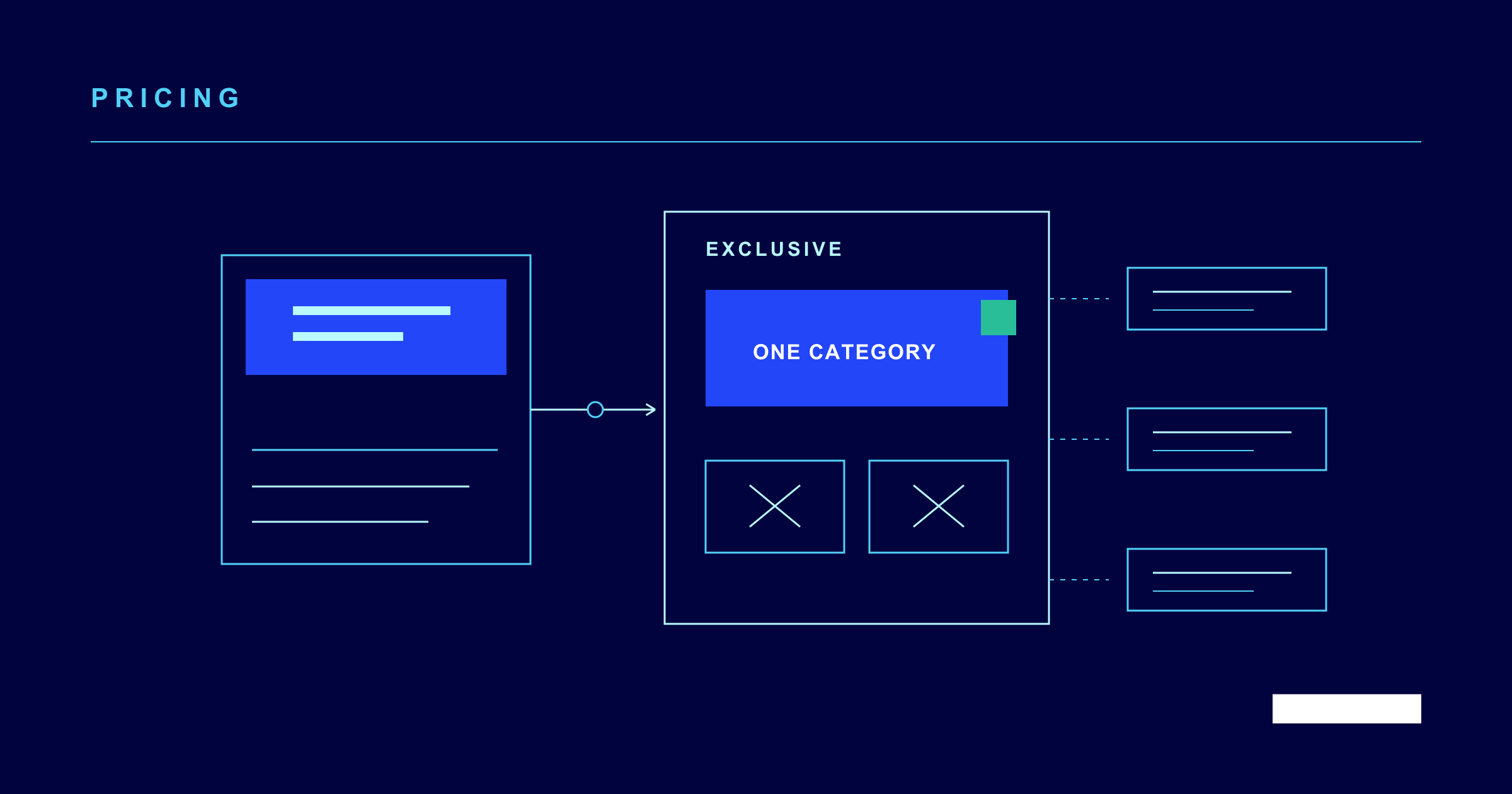
How Much Does Category Exclusivity Cost in a Sponsorship?
Category exclusivity does not have a universal sponsorship surcharge. To evaluate its cost, ask for two otherwise identical offers: one with the defined exclusivity rights and one without them. The difference is the quoted premium for that specific scope. Anvara’s September 2026 marketplace analysis does not establish a reliable, standalone exclusivity percentage.
The buying question is whether keeping specified competitors out of specified spaces helps your campaign enough to justify the added price. Answering it requires a precise definition of what the seller is offering.
What does category exclusivity actually cover?
Category exclusivity is an agreed restriction on competing sponsorship activity within a defined product category and scope. That scope might cover the whole event, a particular activation area, selected channels or a limited period. Ask the rightsholder to describe the actual restriction rather than relying on the phrase “exclusive partner.”
For a beverage brand, “exclusive beverage sponsor” leaves several questions unanswered. Does the category include water, energy drinks, alcoholic drinks and every product in the brand’s portfolio? Does it cover sampling, retail concessions, hospitality and event-owned content?
An official sponsor designation and a product supply arrangement may grant different benefits. Specify each right your campaign needs, then ask which party controls it.
How do you calculate the quoted exclusivity premium?
Request matched proposals with the same event, dates, placements, activation space and other deliverables. Change only the exclusivity provision where the seller can offer that comparison.
Quoted premium = price with exclusivity − price without exclusivity.
Quoted premium percentage = quoted premium ÷ price without exclusivity × 100.
For example, a hypothetical $24,000 exclusive offer compared with an otherwise identical $20,000 nonexclusive offer has a $4,000 premium, or 20%. This is arithmetic for an illustrative proposal, not an observed market rate or a recommended premium.
If the exclusive package also adds a larger booth, more content or presenting rights, the difference is a bundle price. Do not attribute the entire increase to exclusivity. Ask for a breakdown or compare the package as a whole.
Which details should you clarify before comparing offers?
Use a scope table to make the comparison reviewable. Have the seller identify exceptions in writing and route the final terms through your normal agreement review.
Scope item | Question to resolve |
|---|---|
Products | Which products and competitor categories are covered? |
Places | Does protection extend beyond the activation footprint? |
Channels | Are event emails, social channels and hospitality included? |
Time | When does the restriction begin and end? |
Existing arrangements | Which venue, vendor or partner commitments remain? |
Oversight | Who checks compliance and handles reported conflicts? |
A narrow category may suit a single-product campaign better than an expensive restriction across a broader industry. Conversely, a narrow definition may leave direct substitutes outside the protected category. Start with the customer choice you want to influence, then test the wording against that choice.
When might exclusivity be worth paying for?
Exclusivity may be useful when nearby competing activations would materially weaken the experience you are buying. A sampling campaign could value a clearly defined competitor-free sampling area. A brand seeking a long-term event association may care more about consistent category treatment across event-owned channels.
Consider how much protection your team can actually use. If you lack the staff or inventory to serve the audience, paying for broader exclusivity does not fix that execution gap. Compare the premium with other uses of the budget, such as a better location, additional operating hours or stronger follow-up.
Set a maximum premium based on your campaign plan and alternatives. Do not treat the absence of competitors as proof of additional sales; that remains an outcome to assess.
What are the warning signs of a weak exclusivity offer?
Be cautious when the category is undefined, the seller cannot explain existing partner arrangements, or the restriction covers less of the event than the proposal implies. A claim of exclusivity also needs a practical contact and process for raising conflicts.
A beverage sponsor may discover that a venue’s concession arrangement limits what the event can offer. An event-level deal may also leave individual vendors or participants outside its scope. These are questions to resolve with the rightsholder, rather than assumptions to make about every event.
Ask for a revised offer if the agreed scope changes. A smaller protected area or shorter term should trigger a fresh value assessment, even if the package retains the same title.
How should you compare exclusive packages before buying?
Compare audience fit, exact rights, scope exceptions and total campaign cost side by side. Keep the quoted exclusivity premium separate where possible, and record where it cannot be isolated from other benefits.
Use the Sponsorship Price Index for broad category context, not as evidence of a standard exclusivity uplift. The index describes listed asking prices and does not isolate exclusivity as a cause of higher prices.
Browse sponsorship opportunities on Anvara to identify relevant packages, then ask the rightsholder for the specific category protections your campaign requires. A clear, usable scope is more informative than an exclusivity label.
What Does a Presenting Sponsorship Cost, and What Rights Do You Get?
Explore combined title and presenting sponsorship benchmarks, understand the rights to request and compare presenting packages with standard sponsorships.

How Much Does It Cost to Sponsor a Marathon?
Review published marathon sponsorship examples, compare race assets and audience evidence, and budget for the activation costs beyond the rights price.

How Much Does Sponsorship Activation Cost? A Practical Budget Guide
Build a sponsorship activation budget for production, staffing and logistics, with an illustrative $50,000 campaign and a first-month checklist.